AVATAR: The way of the water
Client: 20th Century Studios / Lightstorm Entertainment
Director: James Cameron
Production Base: Wellington, New Zealand
Released: December 2022
Streamliner role: LED volume, large-format laser projection, and Disguise media server operation
The Project
When James Cameron returned to the world of Pandora for Avatar: The Way of Water, the production ambition was staggering. The film required an entirely new visual language — one built around water, light, and the complex interplay between them. Achieving that on camera, at the level Cameron demands, meant solving problems that had never been solved before. Streamliner Productions was part of the New Zealand team that helped make it happen.
The Challenge
The Way of Water was an extraordinarily complex production before the pandemic intervened. Across its years of development, the film required James Cameron and his team to figure out how to film convincing underwater performance capture — a problem that had never been tackled at this scale. Rather than rely entirely on composited backgrounds in post-production, the production sought ways to integrate lighting and environmental detail into the photography itself, creating results in-camera that would otherwise require extensive and costly work in post.
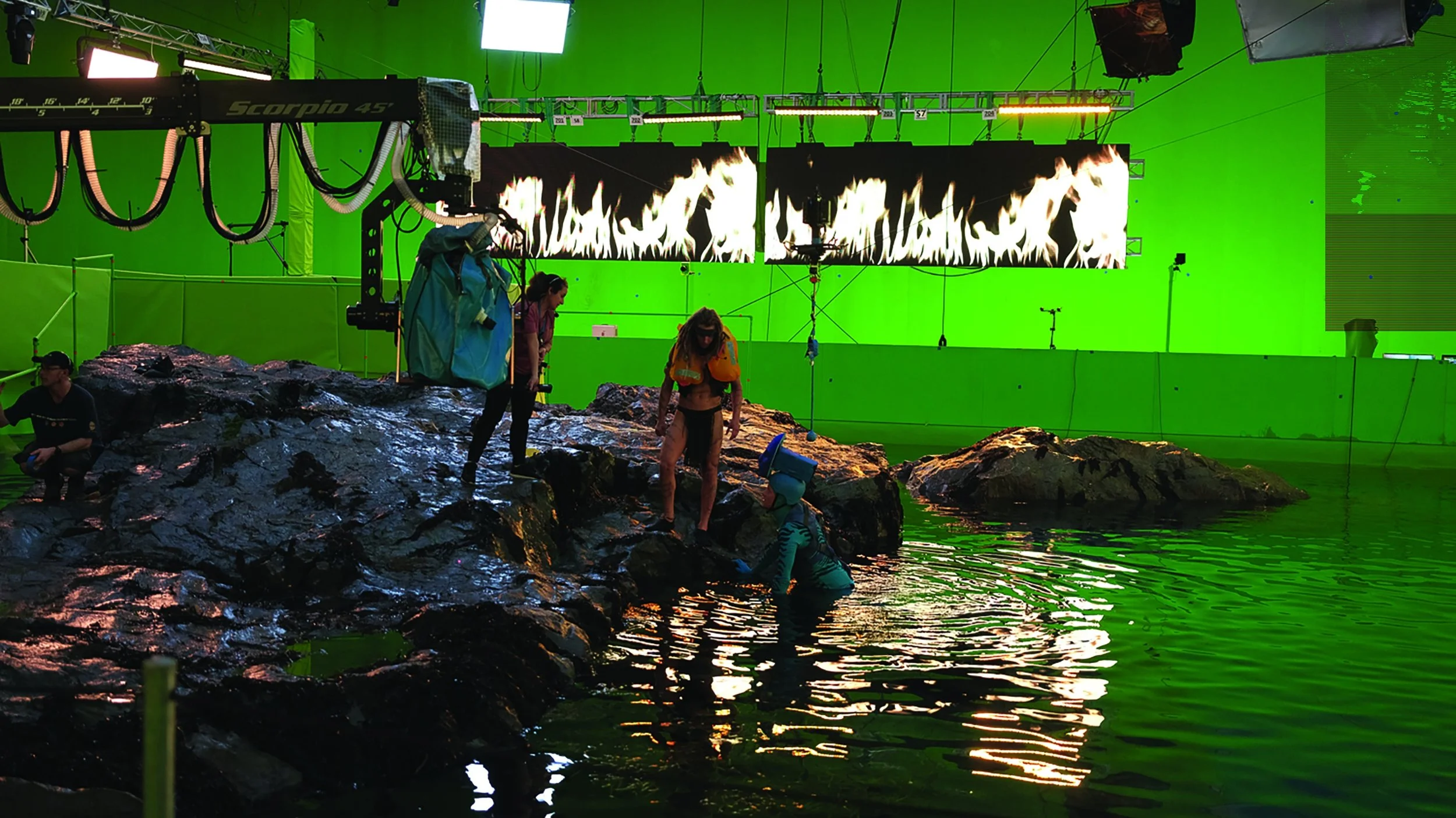
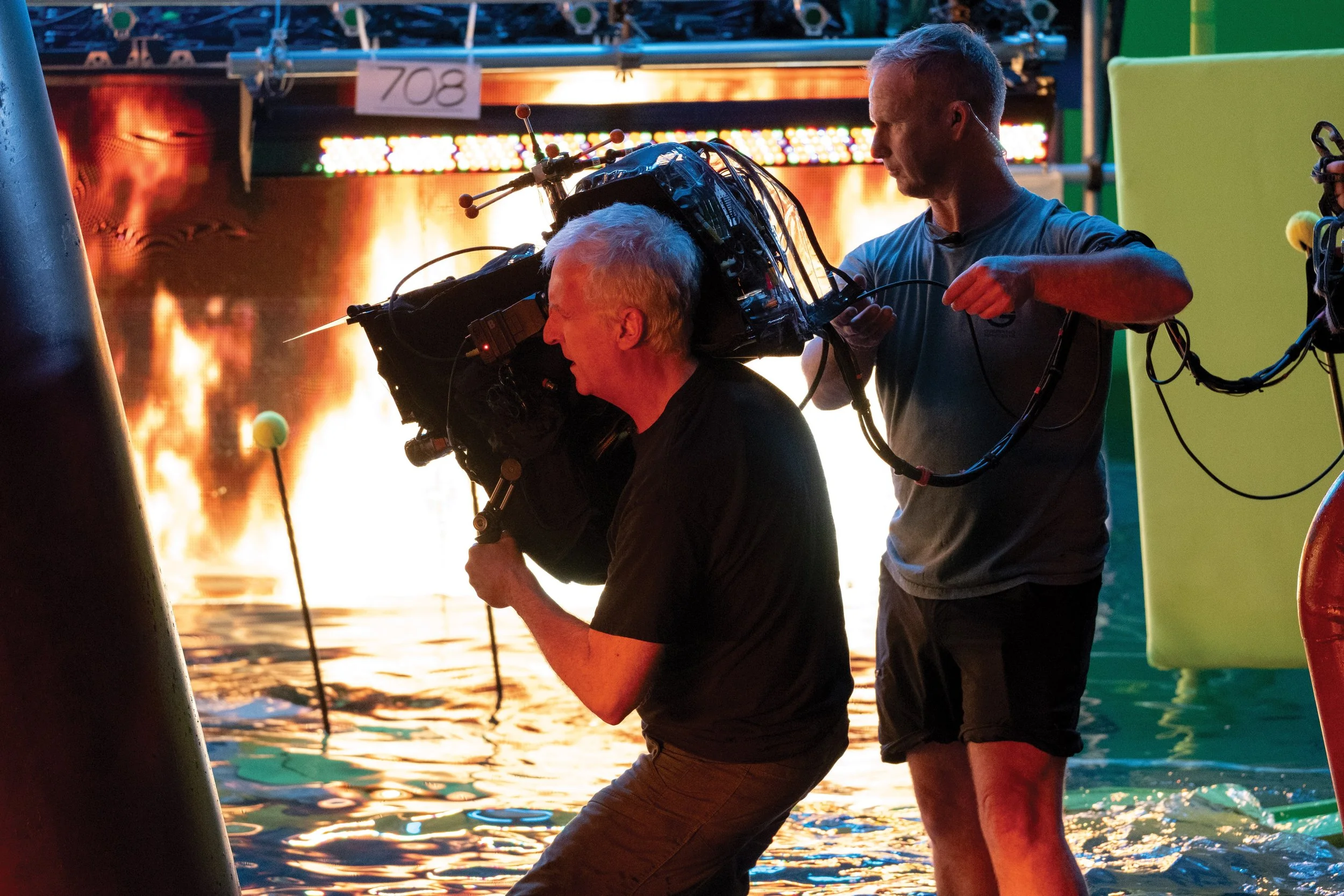
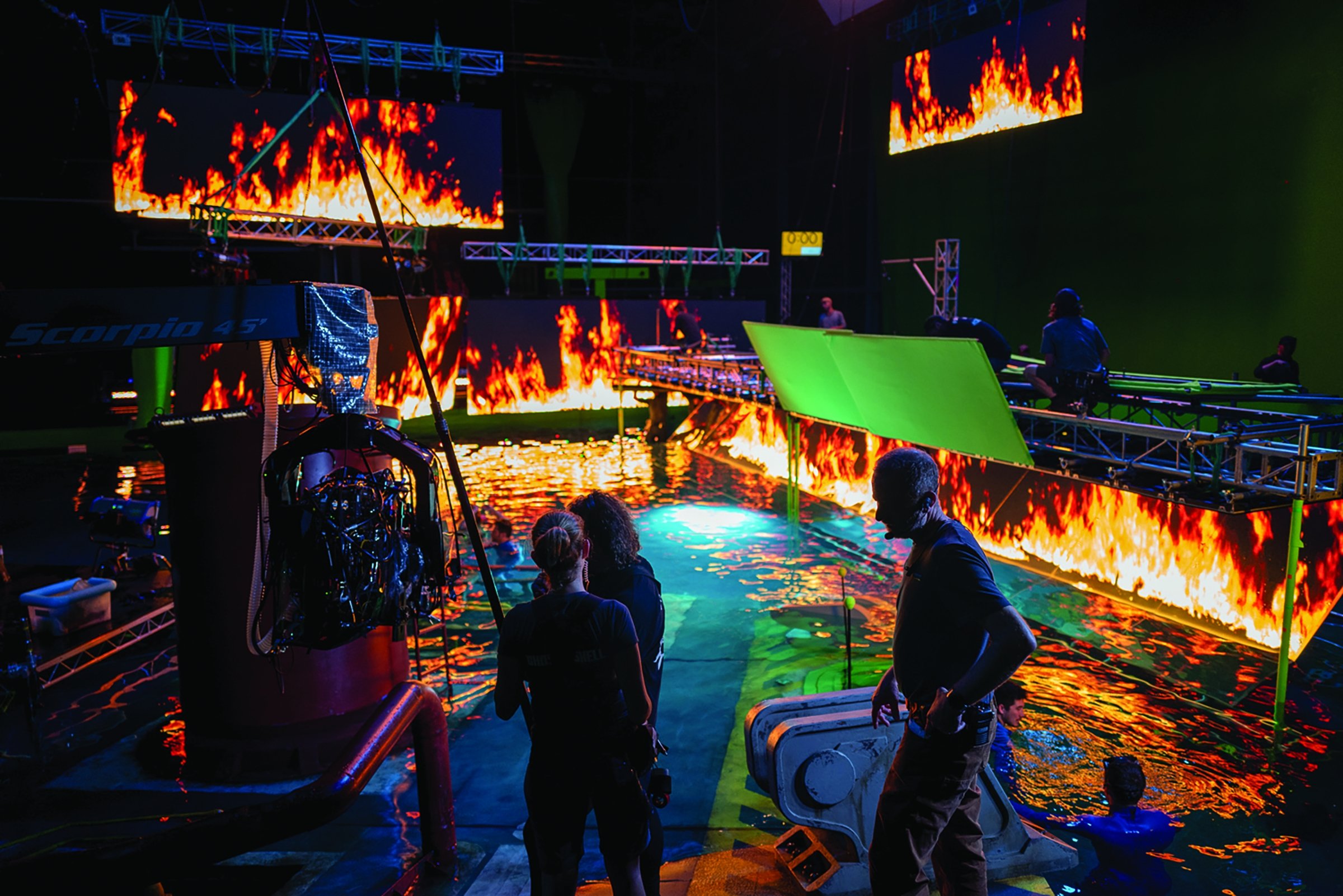
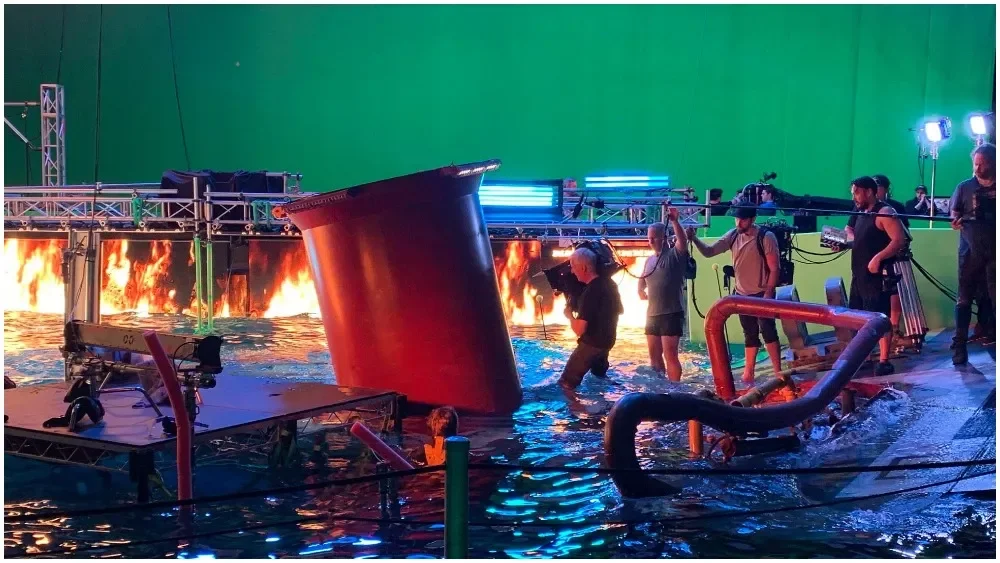
Streamliner's LED panels played a central role in this approach. Positioned across various sets, the panels were used to generate practical reflections onto surrounding surfaces — walls, water, performers, and props — giving the photography a grounded, believable quality that composited light simply cannot match. One particularly demanding application was creating fire reflections across the surface of the water. Recreating that kind of dynamic, flickering light interaction convincingly in visual effects is both time-consuming and expensive. Producing it practically, in-camera, with LED panels displaying fire content in real time, gave the camera exactly what it needed and removed an enormous amount of post-production work from the pipeline.
For certain scenes filmed in the production's large performance capture pools, Streamliner also deployed large-format laser projectors at 20,000 lumens to project imagery directly down through the water. The projected light reached the pool floor, creating natural reflections and caustic patterns that moved back up through the water in the way real underwater light behaves — a physical quality that is extraordinarily difficult to replicate in VFX at any scale.
All playback across both LED and projection systems was managed through Disguise media servers — Streamliner's platform of choice for productions of this complexity, offering the synchronisation, stability, and real-time control that film-grade work requires.
The Pandemic
What was already one of the most ambitious productions in cinema history became considerably more complicated when Covid-19 arrived in early 2020.
Production across the globe ground to a halt. New Zealand's strict border controls and managed isolation requirements created particular challenges for an international co-production of Avatar's scale — even as the country's successful pandemic management ultimately made it one of the safer places in the world to film. The production was able to continue in Wellington under the New Zealand bubble, with international crew navigating border restrictions and managed isolation to get to set. But the broader pipeline was fractured, and the logistical overhead of keeping an international production operational under pandemic conditions was significant.
The original release date of December 2021 was pushed back to December 2022. James Cameron was direct about his disappointment at the time, but equally clear about the quality of the work being produced. For Streamliner, the extended production timeline meant a sustained commitment — adapting to a production environment that changed repeatedly over the course of the pandemic, maintaining the technical pipeline through periods of pause and restart, and delivering at the level the project required when the cameras were rolling.
The Result
Avatar: The Way of Water was released on 16 December 2022. It went on to become one of the highest-grossing films ever made. Weta FX contributed visual effects work to 3,240 shots in the final film — more than 2,200 of which were water shots — a body of work widely recognised as a landmark in visual effects history.
The coherence between the live-action photography and the CG world built around it was not accidental. It was the product of careful, deliberate technical decisions made on set — decisions that Streamliner's LED and projection systems were designed to support.
For a company grounded in live events and broadcast, contributing to a production of this scale and ambition was a significant moment. It confirmed both the capability of the New Zealand production sector to operate at a global level and the value of Streamliner's investment in virtual production technology and workflow. The credits on a James Cameron film do not come easily. They are the result of doing the work properly, under pressure, over a long time.
Streamliner Productions is a creative and technical production company based in New Zealand. Learn more about this project.